Management Districts are one of Houston’s most versatile tools for shaping the look, feel, and function of its neighborhoods and commercial corridors. Created by the Texas Legislature, these locally driven organizations fill gaps in service, fund improvements, and carry out enhancements that benefit both business property owners and the wider community. While Tax Increment Reinvestment Zones focus primarily on large-scale capital projects, Management Districts are geared toward the day-to-day elements that make an area thrive. They support ongoing services, beautification, public safety, mobility, economic development, and other efforts that give places their distinctive character.

Click on Map for larger image.
A Management District is established through state statute and gives communities a way to organize and invest in their own success. The law allows these districts to promote and maintain employment, commerce, transportation, housing, tourism, recreation, the arts, entertainment, and public welfare. In practice, that means they can take on projects that make a district more attractive and functional, such as landscaping, sidewalk improvements, upgraded lighting, signage, or other streetscape features. Many also support marketing initiatives, business recruitment, and economic development programs, while others focus on enhanced safety measures and regular maintenance that keep public spaces clean and welcoming.
Each district is guided by a board composed largely of property owners or their representatives, ensuring that the people most invested in an area’s well-being have a strong voice in how resources are used. Their work is funded primarily through assessments on commercial and other non-residential properties, with single-family homes generally excluded. Before a district begins collecting assessments, property owners must vote or petition in favor of the plan, creating a clear link between support and service delivery. Just as important is the relationship between a Management District and the basic services the City of Houston already provides. These organizations do not replace city functions such as policing, drainage, or utilities. Instead, they build on that foundation by adding visible, meaningful touches that enhance public safety, maintenance, beautification, branding, and pedestrian comfort. Together, these investments help transform neighborhoods and business corridors into vibrant, well-maintained places that inspire confidence and attract new activity.
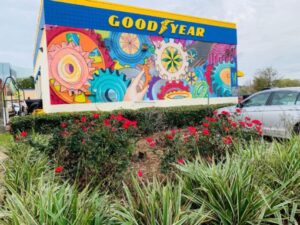
This mural is the first large wall mural in Westchase District. This colorful spectrum of interconnected gears represents the interconnected nature of the diverse community in Westchase District. while also paying homage to the auto repair industry.
The impact of Management Districts is easy to see in the way they shape public spaces and encourage pride in the communities they serve. They often begin with beautification, turning ordinary streetscapes into inviting destinations. Landscaped medians, upgraded lighting, clean sidewalks, public art, and seasonal decorations all work together to create a sense of identity. These visible improvements encourage people to walk, shop, and spend time locally, while also signaling to potential investors that the area is cared for and has momentum.
Safety and maintenance are another cornerstone of their work. Many districts organize supplemental security patrols, keep sidewalks and public areas clean, remove graffiti, and make sure lighting is adequate in key locations. These efforts protect property values, make customers and residents feel more comfortable, and create a foundation for long-term stability. Districts also respond to smaller infrastructure needs that might otherwise be delayed. They fund pedestrian enhancements, repair sidewalks, add benches or lighting, and introduce signage that makes navigation easier. Some participate in environmental projects such as planting trees, creating pocket parks, or building small detention basins, helping to balance urban growth with resilience.
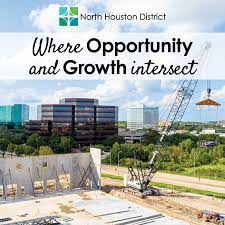
North Houston District imagery to promote development and demonstrate progress.
Management Districts also play a role in business development and branding. They organize community events, promote their commercial areas, and create partnerships that help bring in new businesses and customers. By curating an environment that is clean, safe, and distinctive, they set the stage for redevelopment and renovation, encouraging private investment that strengthens the local economy. Property owners benefit from the increased appeal of their surroundings, and the wider community gains new jobs, services, and amenities that make an area more vibrant.
Examples across Houston illustrate how these principles come to life. In the southwest, one district has brought renewed order and vitality to aging retail corridors by combining enhanced security, beautification, and transportation improvements. In the city’s core, another district that includes historic neighborhoods, cultural venues, universities, and medical centers has worked to make shared spaces safer and more inviting while improving access to transit and green space. To the north, a district serving a large commercial and industrial area has invested in lighting, signage, and open spaces that make the environment more appealing for employers and more accessible for workers and nearby residents. Together, these stories show that Management Districts succeed when they remain close to the people they serve. Their boards can respond quickly to practical needs such as lighting at a busy crosswalk, landscaping along a median, or a security presence on a bustling block. Because their funding comes directly from property assessments, transparency and visible results are critical. And while their mandate is to act locally, their most ambitious projects often rely on partnerships with city agencies, counties, or other organizations that can bring additional resources and expertise.
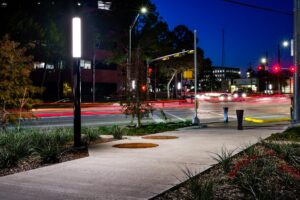
The Energy Corridor District launched west Houston’s first pedestrian-protected intersection in Dec. 2020.
For West Houston, Management Districts represent both an opportunity and a signal of where growth and change may be most effective. In corridors with a strong concentration of commercial property, districts can help maintain a competitive edge by keeping areas clean, safe, and well-presented. In places where redevelopment is underway but city services have not yet caught up, a district can fill in smaller but essential elements such as sidewalks, transit waiting areas, safety patrols, and landscaping that make new development more attractive and sustainable. Where commercial and residential areas meet, districts can provide the public realm improvements that knit these spaces together, creating walkable, secure, and appealing connections.
Understanding how Management Districts are formed, governed, and funded is also important for policy makers, developers, and community leaders. Fair assessments, accountability, and alignment between district budgets and community needs are essential to ensuring that these organizations remain focused and effective.
Management Districts may not command the same headlines as major infrastructure projects, but their influence is felt every day. They offer a nimble way to raise standards of safety, beauty, and economic vitality, often in quiet but significant ways. For West Houston, embracing the potential of well-structured districts can ensure that growth enhances the character of the area, strengthens its environment, and creates opportunities for residents, businesses, and visitors alike.