
For decades, the Grand Parkway has represented the Houston region’s commitment to planning transportation infrastructure ahead of growth. Recent action by Fort Bend County could help advance one of the most important remaining pieces of that vision: Segment C, connecting Interstate 69 in Sugar Land with State Highway 288 near Rosharon. 
In May 2026, Fort Bend County Commissioners Court authorized an agreement allowing the Texas Department of Transportation to take the lead in developing and constructing the Fort Bend portion of Segment C. This decision represents a significant step forward for a corridor that has been environmentally approved for years but has not otherwise advanced.
For the West Houston Association, progress on Segment C reinforces a longstanding principle of quality growth: major transportation corridors must be planned, preserved and delivered before development makes them more difficult and expensive to build.
Completing a Critical Regional Connection
The planned Segment C is approximately 26 miles long and extends from I-69/US 59 in Sugar Land to SH 288 near Rosharon. According to TxDOT, the environmentally approved design calls for a four-lane, controlled-access toll road with intermittent frontage roads through Fort Bend and Brazoria counties.
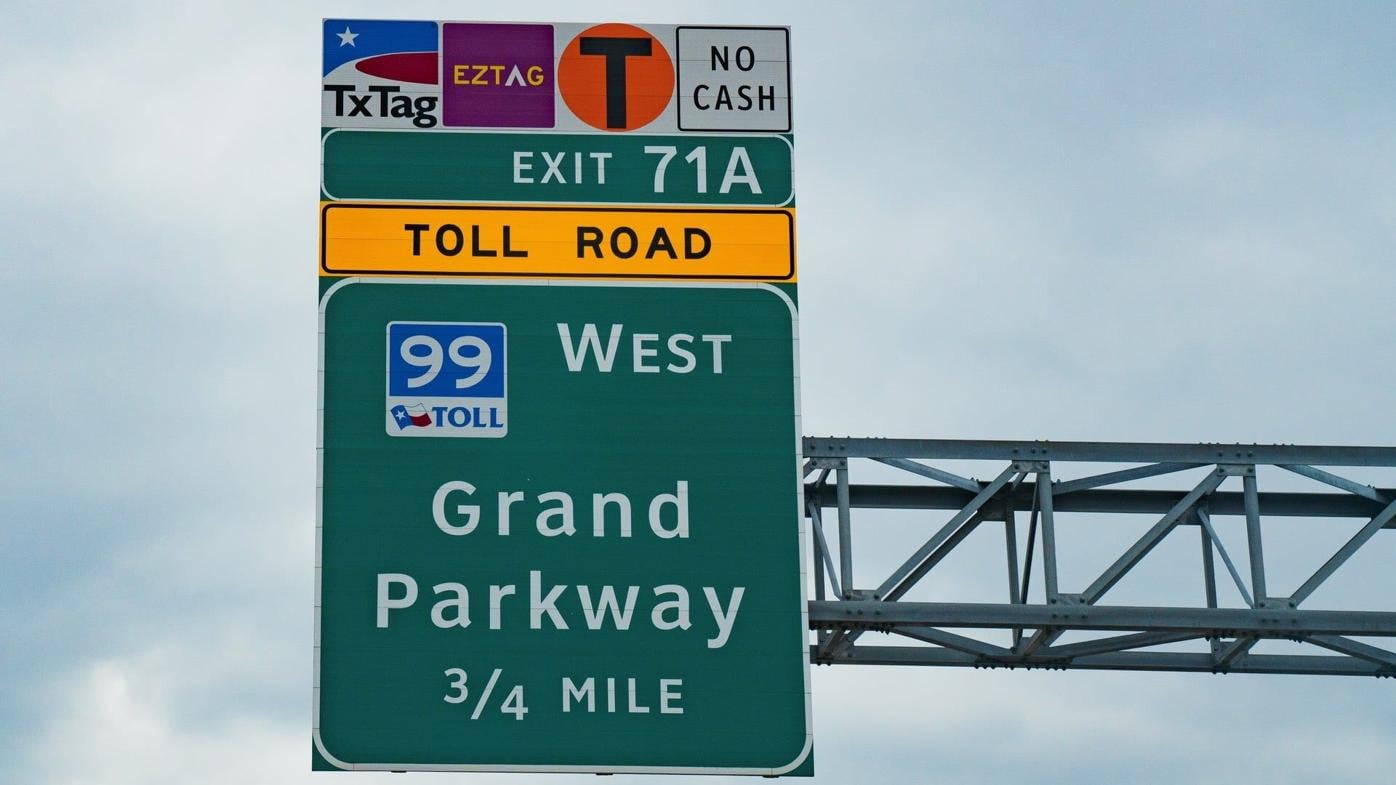
Today, the Grand Parkway extends south through western Fort Bend County before ending at I-69. Segment C would continue the corridor into southern Fort Bend County, eventually connecting with Segment B and providing a more complete outer loop between Sugar Land, the SH 288 corridor and I-45 in Galveston County.
The connection would create another regional route for people and freight traveling across Greater Houston without requiring every trip to pass through the region’s more established inner corridors. It could also improve connections among communities including Sugar Land, Richmond, Rosenberg, Thompsons, and Rosharon, as well as major employment destinations along SH 288, in the Texas Medical Center and throughout central Houston.
Segment C is also expected to intersect with the future extension of the Fort Bend Parkway Toll Road. Together, these facilities could create a stronger north-south and east-west transportation network serving some of the fastest-growing portions of Fort Bend County.
A Brief History of the Grand Parkway
The vision for an outer highway loop around Houston dates back several decades. The Grand Parkway Association was created in 1984 to help coordinate development of the proposed corridor, which was divided into multiple segments to allow environmental review, funding and construction to proceed in phases.

The first completed portion was Segment D in Fort Bend County, which opened in 1994. It connected I-69 in Sugar Land with the Katy area and established the foundation for what would become the region’s third major highway loop, beyond Interstate 610 and Beltway 8.
As Greater Houston expanded, additional segments opened across Harris, Montgomery, Liberty and Chambers counties. Today, much of the northern and eastern Grand Parkway is complete, providing a continuous route around a large portion of the metropolitan area. However, the southern sections remain unfinished.
Segment C received federal environmental approval, and TxDOT approved the project’s most recent environmental reevaluation in March 2017. Fort Bend County also began taking incremental steps toward future construction. In 2016, the county spent approximately $5.7 million to build a short section extending south from I-69 to the vicinity of Rabbs Bayou. The Fort Bend County Toll Road Authority later continued mapping, appraising and identifying right of way needed for the future corridor.
Despite that groundwork, Segment C did not move into full construction. Fort Bend County retained “primacy,” meaning the county held the first opportunity to develop, finance and operate the project. Other toll road priorities, particularly the continued extension of the Fort Bend Parkway, limited the funding available to advance Segment C.
As recently as 2024, no clear construction schedule had been established.
A Major Change in 2026
That outlook changed in May 2026 when Commissioners Court voted to allow TxDOT to assume responsibility for advancing Segments C-1 and C-2, along with related portions of the Grand Parkway system.
Under the framework reported following the county’s action, TxDOT would fund and construct the project at no cost to Fort Bend County. The anticipated first phase, Segment C-1, would extend south from I-69 toward Austin Point and the planned intersection with the Fort Bend Parkway Toll Road. Direct connectors between Segment C and I-69 are also expected to be included.
The developing agreement reportedly calls for TxDOT to have a design-build agreement in place by the end of 2027 and to complete Segment C-1 and the I-69 direct connectors by the end of 2032. The estimated investment for Segment C and the direct connectors could approach $1.5 billion.
These dates and project details remain subject to final agreements, design, funding and the project-development process. TxDOT’s current project page still describes the full 26-mile Segment C as environmentally approved but not yet constructed. Nevertheless, the transfer of project leadership to TxDOT provides a clearer potential path toward delivery than the corridor has had in years.
The announcement also follows movement on Segment B-1 between I-45 and the Alvin area. In 2026, TxDOT awarded a design-build contract valued at approximately $1.47 billion for that project. Advancing both Segment B and Segment C would move the region significantly closer to completing the southern Grand Parkway.
Planning Infrastructure Alongside Development
The timing is particularly important because development is already accelerating along the proposed corridor.
Austin Point, a planned 4,700-acre community in southern Fort Bend County, is projected to accommodate approximately 50,000 residents at full buildout. Other developments, including The George and additional communities near FM 2977, are expected to bring new homes, businesses and employment centers to the area.
This growth presents an opportunity to coordinate land use and transportation rather than attempting to retrofit infrastructure after communities have been built. Preserving right of way now can reduce future costs, protect potential interchange locations and help local governments and developers create more connected thoroughfare networks.
At the same time, advancing a project of this scale requires careful attention to drainage, flood risk, environmental impacts, access management and local roadway connections. A new highway cannot function as an isolated facility. Its success will depend on coordination among TxDOT, Fort Bend County, Brazoria County, municipalities, toll road authorities, drainage districts, landowners and the development community.
Advancing Quality Growth
Segment C is more than another highway project. It is a long-term investment in regional connectivity, economic opportunity and the ability of southern and western Fort Bend County to accommodate growth responsibly.
WHA supports long-range planning that aligns transportation, drainage, utilities and development. The recent action by Fort Bend County offers an important opportunity to advance a corridor that has been envisioned for more than a generation.
The next steps will require sustained coordination, transparent public engagement and continued attention to how Segment C connects with I-69, SH 288, the Fort Bend Parkway and surrounding communities. If those pieces are planned together, the project can help Greater West Houston remain connected, competitive and prepared for the growth still to come.