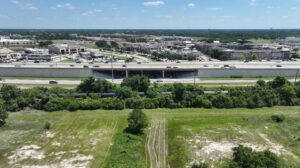
The project will extend Greenhouse Road north of Mound Road, creating a connection to US 290 and Skinner Road via an underpass beneath double Union Pacific Railroad tracks. The work includes a new roadway underpass, a dedicated pedestrian trail, stormwater pump station infrastructure to reduce flooding risk on the new roadway, a railroad bridge, and replacement of a portion of the existing US 290 bridge over Skinner Road. As part of the preliminary design process, multiple alternatives were evaluated, including the possibility of an overpass. Based on engineering, site conditions, right-of-way needs, railroad coordination, constructability, and long-term functionality, the underpass was determined to be the optimal design. This approach provides the needed connection while fitting the surrounding roadway network, development pattern, and infrastructure constraints. For northwest Harris County, this connection matters. Growth in and around Cypress, Towne Lake, and the broader US 290 corridor has created increasing demand on major north-south routes, particularly Barker Cypress Road and Fry Road. 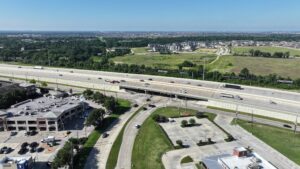
For nearby commuters, businesses, schools, and emergency responders alike, this project represents a critical improvement to the area’s mobility needs. Indeed, the value of the project is not limited to convenience. It is also about safety and reliability. Railroads and highways often divide communities, limiting access and creating delays for both residents and emergency responders. A new underpass creates a more dependable route across these barriers. The project design also preserves space for a planned Harris County Emergency Services District No. 9 fire station near Greenhouse Road and Mound Road, which is expected to improve emergency response times in and around the Towne Lake community.
Safety was also a major consideration in the underpass design. Because roadway underpasses require careful stormwater management, the project includes a dedicated stormwater pump station and multiple layers of protection intended to reduce flood risk on the new roadway. Those protections include berms around the underpass to help prevent adjacent sheet flow from entering the roadway area, as well as a backup generator for the stormwater pump station to provide additional reliability during power outages or severe weather events.
 This is the type of project that demonstrates why infrastructure must be planned at a regional scale. Roads, drainage, utilities, emergency services, pedestrian access, and economic development are all connected. A roadway underpass may appear to be a transportation project, but its benefits touch many parts of community life. It can shorten trips, improve access to jobs and services, support commercial development, create safer routes, and help growing communities function as connected places rather than isolated developments.
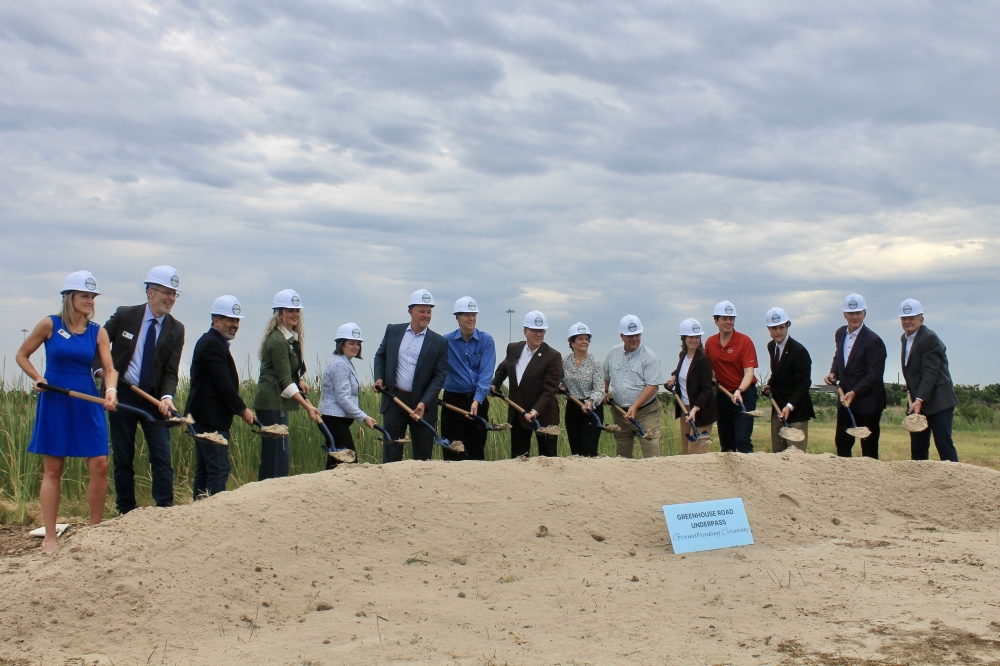
The Greenhouse Road underpass also highlights the important role special districts play in helping major infrastructure projects come to fruition. Municipal Utility Districts, or MUDs, are often associated with water, wastewater, and drainage infrastructure, but their role can extend into certain broader infrastructure systems like roadways that make development possible. Harris County MUD 500 has played a central role in advancing this project for many years, working with numerous partners.
Under its agreement with TxDOT, HC MUD 500 was responsible for completing design, land acquisition, and utility relocations for the project. Those steps were completed in late 2025, allowing TxDOT to move into bid advertisement and construction oversight. The front-end design and utility work is often less visible than construction itself, but it is essential. Before a project of this scale can move forward, a project’s sponsors must resolve design constraints, secure land and easements, relocate utilities, coordinate with any railroad and existing roadway owners, address drainage, and align funding responsibilities.
HC MUD 500 also coordinated with numerous oil and gas, electric, telecommunications, and other utility providers to relocate existing utilities that would have interfered with construction. Caldwell Companies dedicated land and easements needed for the project, while HC MUD 500 worked with TxDOT and Harris County on shared easements for drainage facilities and the underpass pump station outfall.
The funding structure shows the same partnership model. The construction bid came in at approximately $76 million, with about 80 percent of the construction cost, or roughly $60.8 million, covered through federal funds secured by the Houston-Galveston Area Council. Local partners, including Harris County MUD 500, Harris County Precinct 3, Harris County Emergency Services District No. 9, and the Harris County Toll Road Authority, committed to sharing the remaining local match. HC MUD 500 has also reported that total estimated project costs, including design, utility relocations, and construction, are approximately $88.5 million, with the District’s expected total contribution just under $19.5 million.

Rendering courtesy Caldwell Companies/Harris County MUD 500
Construction is anticipated to be completed in late 2028 or early 2029, subject to the final contractor schedule and normal construction conditions. The project schedule is expected to include a seven-day workweek, and the contract includes incentives intended to help expedite key portions of the work and reduce traffic disruptions. Those incentives include milestones tied to completing the US 290 bridge and main lanes, as well as reopening the frontage roads and Skinner Road under US 290.
For the West Houston Association, the Greenhouse Road underpass reflects a core principle: quality growth requires quality infrastructure. As Greater West Houston continues to grow, the region needs projects that connect communities, support commerce, improve safety, and anticipate long-term demand. It also needs local partners with the capacity and commitment to move complex projects from concept to construction.
Special districts like MUDs are a critical part of that story. They can help deliver infrastructure at the scale and pace needed in high-growth areas, while coordinating with counties, state agencies, regional planning organizations, emergency service providers, developers, and residents. The Greenhouse Road underpass is a strong example of how that model can work effectively.
When complete, the project will do more than move cars beneath a railroad. It will connect people to neighborhoods, businesses, schools, emergency services, and opportunity. It will strengthen the regional transportation network and support continued investment in northwest Harris County. Most importantly, it shows what is possible when local leadership, special districts, public agencies, and private partners work together to deliver infrastructure that serves both today’s residents and the region’s future.