
Few transportation corridors better reflect the growth and changing needs of Greater West Houston than US 290 and Hempstead Highway. Together, they connect the urban core to northwest Harris County, Waller County, and communities continuing to develop beyond the Grand Parkway. They carry commuters, freight, school buses, emergency vehicles, and families traveling between some of the fastest-growing parts of the region.
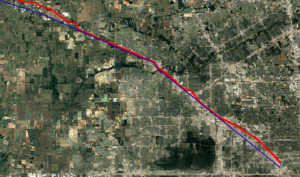
Although the two roads run alongside one another for much of their length, they serve different purposes. US 290 is the corridor’s primary regional highway, moving large volumes of traffic between downtown Houston and communities such as Jersey Village, Cypress, Hockley, and Hempstead. Hempstead Highway provides local access to businesses, neighborhoods, industrial properties, and cross streets while offering an important alternative when congestion or incidents disrupt the freeway.
Planning their future requires thinking of them not as competing roadways, but as complementary parts of a single transportation system.
Growth Is Changing the Corridor
The reconstruction and expansion of US 290 represented a major regional investment and significantly improved the corridor. However, infrastructure needs do not remain static. Northwest Harris County and Waller County continue to add new homes, schools, businesses, industrial facilities, and employment centers. Each development adds trips to US 290 and to the network of roads feeding into it.
The pressure is not limited to the freeway. Barker Cypress Road, Fry Road, Greenhouse Road, FM 529, SH 99, and other major connections increasingly experience congestion as drivers move between neighborhoods, workplaces, and US 290. In the outer portions of the corridor, roads originally designed for rural or lightly developed areas are being asked to serve suburban levels of traffic.
Freight adds another layer of complexity. The corridor supports manufacturers, distribution centers, construction activity, and commercial development throughout Greater West Houston. These businesses depend on reliable travel times, but freight traffic must often share the same routes used by commuters, school traffic, and local residents.
Continued growth will require more than periodically widening individual roads. It calls for a coordinated system that distributes traffic, preserves access, improves safety, and provides reliable alternatives.
Hempstead Highway’s Expanding Role
Hempstead Highway presents one of the region’s most significant mobility opportunities. The roadway already parallels US 290, connects with major north-south thoroughfares, and follows an established transportation corridor that also includes the Union Pacific Railroad.
The Texas Department of Transportation has studied approximately 9.5 miles of Hempstead Road between Beltway 8 and Interstate 610. The study considers local access and safety, drainage, bicycle and pedestrian facilities, connections to US 290 managed lanes and park-and-ride facilities, and accommodation for possible future high-capacity transit. The Harris County Toll Road Authority has also examined the corridor’s potential for a future managed facility.
A modernized Hempstead Highway could provide an additional option for longer-distance trips while preserving access to adjacent properties and businesses. Managed lanes could offer more dependable travel during peak periods and reduce pressure on US 290. A carefully phased project could also allow improvements to move forward as demand and available funding justify them.
However, the opportunity extends beyond adding vehicle capacity. Rebuilding portions of Hempstead Highway could improve drainage, modernize intersections, address deteriorating pavement, and create safer ways for people to walk or bike. Thoughtful design could strengthen connections between neighborhoods on either side of the corridor rather than creating another barrier between them.
The Importance of Cross-Corridor Connections
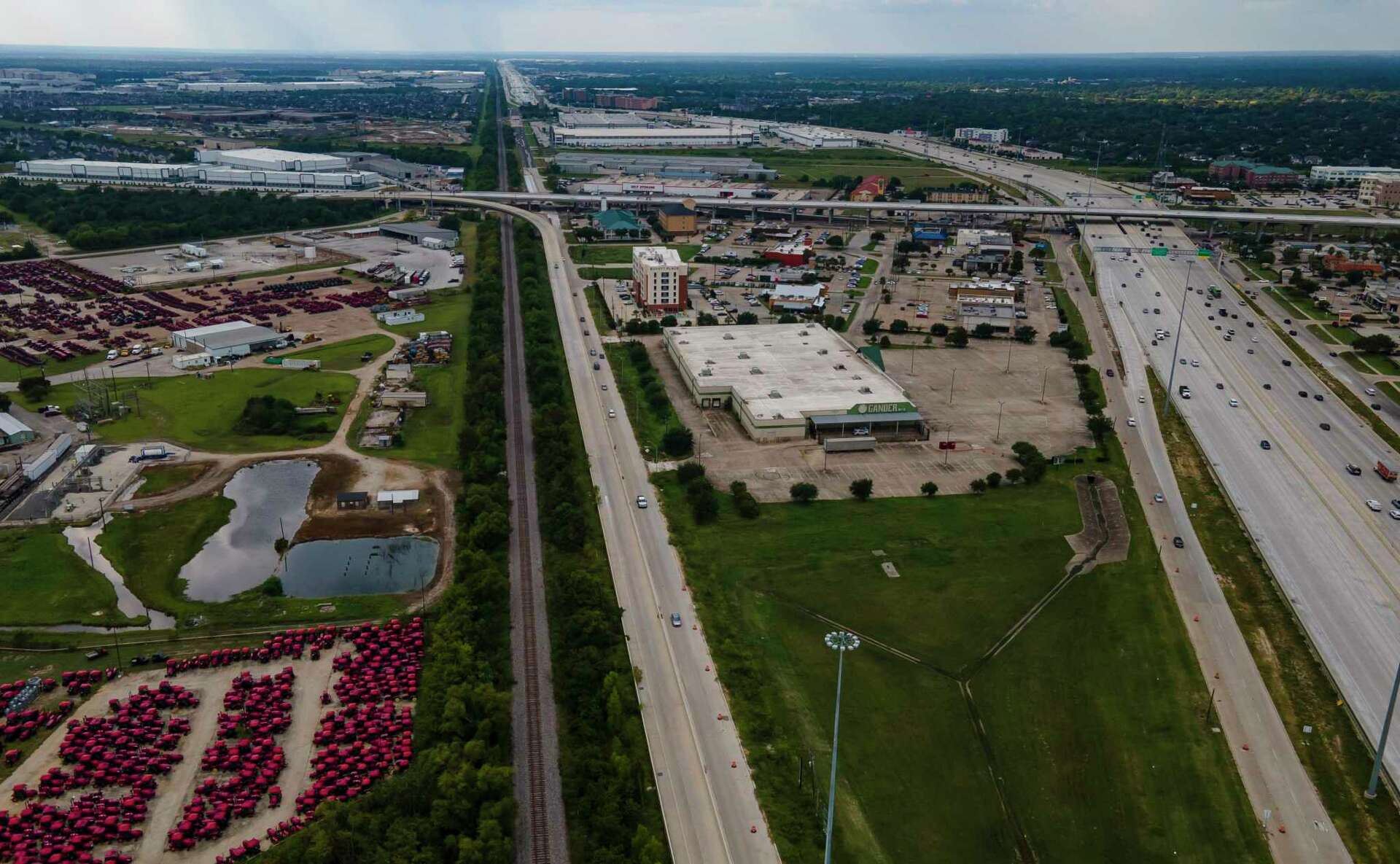
Photo courtesy of Mark Mulligan (Houston Chronicle)
Because the Union Pacific rail line runs alongside Hempstead Highway, many north-south roads must cross both the roadway and active railroad tracks. At-grade crossings can create delays and safety concerns, particularly when long freight trains block traffic. These delays affect more than commuters. School buses, ambulances, fire trucks, and commercial deliveries all depend on predictable access across the corridor.
Grade separations at carefully selected locations could remove conflicts between trains and vehicles, improve emergency response times, and strengthen connections between communities. The planned Greenhouse Road underpass provides an example of the kind of partnership required. That project brings together federal funding and support from Harris County Precinct 3, the Harris County Toll Road Authority, a municipal utility district, and an emergency services district.
Not every crossing can or should be grade separated, but the region should identify the most critical locations before continued development makes improvements more difficult and expensive. Preserving right-of-way today may be just as important as funding construction tomorrow.
More Than a Highway Project
The future of the 290 and Hempstead corridor cannot be addressed by one agency or through one type of project. TxDOT, Harris County, HCTRA, METRO, the City of Houston, Waller County, municipal utility districts, school districts, developers, and property owners all have responsibilities within the larger system.
Coordination is especially important when transportation and drainage needs overlap. Roadway projects can create opportunities to improve stormwater conveyance and detention, while drainage corridors can sometimes support trails and other community connections. Park-and-ride facilities, mobility hubs, and safe bicycle and pedestrian routes can also provide more choices without requiring every trip to begin and end on US 290.
The private sector has an important role as well. Developers can help preserve future connections, participate in infrastructure agreements, consolidate driveways, and design projects around a more connected street network. Early coordination can reduce conflicts and help public investments perform more effectively over time.
Planning for the Next Generation of Growth
US 290 will remain the transportation spine of Northwest Houston, but it cannot carry the region’s future alone. Hempstead Highway, the surrounding thoroughfare network, rail crossings, drainage systems, and local connections must all work together.
Success should be measured not simply by the number of lanes constructed, but by whether travel becomes safer and more reliable, freight moves efficiently, emergency vehicles can reach their destinations, and growing communities remain connected to jobs, education, and opportunity.
Greater West Houston has the chance to plan this corridor before today’s manageable challenges become tomorrow’s permanent bottlenecks. With coordinated investment, strong partnerships, and a focus on quality growth, US 290 and Hempstead Highway can function as two parts of one resilient mobility system prepared to serve the region for decades to come.